Brown Ring Around Your Ceiling Vent? Here’s What We See
Noticing a brown ring around a ceiling vent? Our roofing team explains what it means, common causes of vent leaks, and how roofers actually fix the problem.
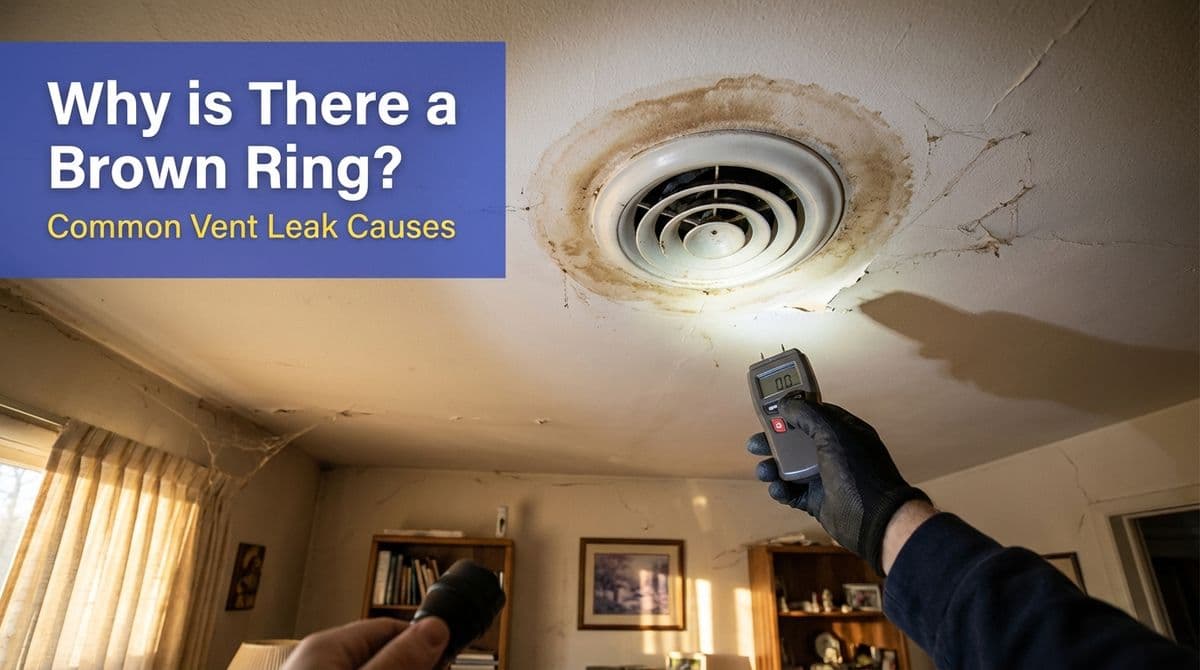
“There’s a brown ring around my vent…”
We recently got a call from a homeowner — let’s call her Diane — who was worried about a brown ring forming around her living room ceiling vent.
As she described it to us, the stain was right at the vent opening and seemed to follow the lines of the ceiling. Outside, she’d noticed a pile of pine needles sitting in the “crease” of her roof near where that vent would be, and she was pretty sure that’s where the problem started.
We hear this kind of story a lot, and as a roofing company, we’ve walked into many living rooms where that brown ring is the first visible sign of a roof leak around a vent. So in this post, we want to walk you through how our team thinks about these stains, what usually causes them, and how we typically fix them once we get on site.
What that brown ring around your ceiling vent really means
When a customer like Diane calls us about a ring or halo around a vent, the first thing we explain is: that stain is dried water.
Water has leaked into the ceiling, soaked the drywall or plaster, and then slowly dried out. As it dries, it leaves behind minerals, dirt, and sometimes a bit of insulation dust — that’s what creates the brown or yellowish ring.
From our experience, a ring around a ceiling vent usually points to one of two things:
- A roof leak near a roof vent (like a plumbing vent, attic vent, or fan vent), or
- A condensation issue from air leaking around the duct or vent opening inside the house.
Because Diane had already noticed a pile of pine needles sitting in a roof valley close to her vent, our team’s first suspicion was a roof leak at or near a vent penetration.
Common roof leak causes around vents
Whenever we visit a home with this kind of stain, we start outside. Here are the problems we most often find around roof vents:
1. Cracked or deteriorated vent flashing
Every vent that pokes through your roof (plumbing stacks, bath fan vents, etc.) should have a flashing — a protective metal or rubber boot that seals around the pipe and under the shingles.
Over time, we see these issues all the time:
- Rubber boots dry out, crack, or split where they meet the pipe.
- Sealant around the flashing gets old, brittle, or washed away.
- Metal flashing gets bent or pulled loose by wind, limbs, or foot traffic.
When that happens, water can run right under the shingles and follow the vent pipe down until it finally shows up as that brown ring on your ceiling.
2. Debris buildup in valleys and around vents
In Diane’s case, she mentioned a “bunch of pine needles” sitting in the crease of the roof. Our crew sees this a lot in areas with pine or hardwood trees.
Piles of leaves, pine needles, and twigs can:
- Trap moisture and keep the roof surface constantly damp
- Force water to back up and flow sideways under shingles
- Hide damaged shingles or flashing so problems go unnoticed
So even if the vent flashing itself isn’t badly damaged, that debris can still help water find its way inside.
3. Cracked shingles or nail pops near the vent
We also inspect the shingles immediately around the vent. Sometimes we find:
- Cracked or slipped shingles from age or wind
- Nail pops where nails have backed out and lifted the shingle
- Improperly cut shingles that never sealed right around the vent
Any small opening near the vent can let water in. Because water likes to travel along framing and pipes, it may show up at the ceiling vent even if the actual entry point is a foot or two away.
How our roofing team typically fixes vent leaks
When our crew comes out to a home like Diane’s, we follow a fairly consistent process. Here’s how we usually tackle it, step by step.
1. Inspect the attic and ceiling from inside
We’ll start inside the house if we can safely access the attic:
- Look directly above the stained ceiling area for damp insulation or wood
- Check around the vent pipe or duct for active drips or water tracks
- Look for mold, rot, or long-term moisture damage
This helps us confirm whether it’s truly a roof leak or possibly a duct/condensation issue.
2. Inspect the roof surface and vent flashing
Next, we get on the roof. Our team will:
- Locate the vent that lines up with the stained area
- Examine the flashing boot for cracks, gaps, or deterioration
- Check shingles and nails around the vent
- Clear away any debris in nearby valleys or low spots
If we suspect the area is leaking but can’t see it right away, we may carefully perform a controlled water test, running water around the vent while someone watches inside for leaks.
3. Repairing or replacing the vent flashing
Once we’ve identified the source, here’s what our crew typically does:
- Replace damaged flashing boots with new, properly sized ones
- Lift and relay shingles around the vent so they overlap correctly
- Reseal vulnerable areas with roofing sealant where appropriate
- Secure any loose nails and replace cracked shingles
On older roofs, we sometimes recommend upgrading to higher-quality, longer-lasting vent flashings, especially if we’re already out doing other work.
What you can do as a homeowner
While we always recommend having a roofer handle actual repairs, there are a few smart steps you can take if you notice a brown ring around a ceiling vent:
- Take a clear photo of the stain and note if it’s growing over time.
- Check outside from the ground to see if there’s debris in roof valleys or near vents.
- Don’t poke the ceiling — if there’s trapped water, you can make a big mess.
- Call a roofer sooner than later; small stains often mean small leaks, which are easier and cheaper to fix early.
After we fix the leak, we usually advise homeowners to wait through a couple of good rains to confirm everything is dry before repainting or repairing the ceiling.
When to bring in a professional roofer
Anytime you see water stains around vents, light fixtures, or along ceiling seams, it’s worth having a roofing company take a look. Our team deals with vent leaks all the time, and in many cases, we can stop the problem with a focused repair rather than a full replacement.
If you’re seeing a brown ring around your ceiling vent and you suspect it’s tied to debris or a vent on the roof, we’re happy to come out, inspect it, and give you an honest assessment of what it will take to fix it for good.